

Build a Self-Managed Tech Team

You can build a technology and innovation self-managed team to boost your organization.


What is a high-performing team in software engineering?


There are different several ways to define performance.

One way that makes a big difference is how much the team is dependent on its leader. When the leader makes all the decisions, it limits the team’s potential.

You can measure the effectiveness of leaders when they leave either for a short time or permanently. If team performance declines, it’s a sign that the leader didn’t create the conditions for the team to manage themselves.

Why do self-managed teams need a leader?

You can see the top-performing teams in the world, like sports teams, for example.

  • What do they do?
  • What are the conditions?
  • What behaviors do they demonstrate?

Is the coach on the field during the game to make all the decisions? No, coaches do most of their work before and after the game. They give feedback, share insight, give advice, and prepare their players for the next game.

Inexperienced managers often have a desire to make all decisions, even those on the front lines. They get impatient, and take most of the decisions rather than see them learn from doing or coaching them to improve.

The role of leaders is to get the best performance out of the team.

And to make the vision and goals clear for all.

Build Tech Teams from Mexico
What is a self-managed team?

How a team makes decisions? Is the leader approving or making every decision? The role of the leader is to make employees think for themselves.

In a self-managed team, even the most junior employee is empowered to make a meaningful decision that affects the team’s performance.

When working with your team always ask these questions:

  • Is the company/project vision clear?
  • Are the company/project goals clear?
  • Do you understand what we’re trying to accomplish and objectives?

Everybody has to think of these answers to be a winning team.

Set the common ground and start coaching from there.

In software, teams are very common an engineer comes to you and asks, “What should I do? How should this work? Is this the correct way to do it?” You can respond by asking back, “What’s the goal we’re trying to accomplish? Which direction do you think would serve the vision and our goals better?”

Managers often decide for the person because it’s faster. Then the same engineer goes and does what the boss suggested without taking the time to think why?

It is a far better option to make the engineers think through the vision, the goals, and the trade-offs. Once they’ve done it, they can tell what options are better and why.

The coach has to point out potential flaws in their reasoning. Maybe they made an inaccurate assumption, other data, or a different approach.

Managers must teach engineers how to think about complex matters.

Engineers should consider the vision, the goals, and the data, so they can decide on doing some analysis.
When your engineers do this, you can coach them to solve complex problems, instead of solving for them. At that point, a team member can grow.

How to develop a self-managed team?

Every challenge is a learning opportunity; don’t take them away from the team. Ideally, they should be making most of the front-line decisions.

But even after deciding for your team, you can sit down with them and explain the reasoning behind the decision.

It’s worth investing time into because if everybody on the team thinks and analyzes by themselves, they all can move faster.

How do you measure the performance of management?

A manager being overloaded with work may be a warning sign. Managers should delegate more responsibility to their team and let them own it autonomously.

Strategies for leaders to build self-managed teams


1. How often do engineers ask the leader to make decisions


Watch for these types of questioning:

  • Can I do this?
  • Should I do this?
  • Am I allowed to do this?
  • Do you approve this?

2. Do more coaching

Don’t make decisions for them, unless you have to. Instead try, when they come with questions, ask back, “What would you do in my place?” make them think through the problem. Or try explaining, that you want them to think for themselves, analyze and take decisions, to become a more complete professional.


3. Encourage the team to make decisions


Growth happens when somebody gives you an opportunity and trusts you to make it happen. You need space and support to deliver a goal.

A good manager can get results. A great manager can get results and grow their people, so they can do the same for others. Most people are open to and grateful for these opportunities. They see this helps them to grow.
Build Tech Teams from Mexico
Communicate purpose to become a self-managed team

Set a clear expectation for them to think for themselves and to make decisions. Ask them to think about it and make a proposal.

Always clarify the vision and the goals first.

Leaders are not the right people to make frontline decisions. They must help the individual collaborators to make the right decisions.

Help them make decisions, and coach the thinking process and reasoning.

Requisites to become a self-managed team


Be patient, building technical self-managed teams takes time. Managers need to observe each team member’s thinking process and select if they are fit to be self-managed.

Some people are not comfortable making decisions. They might be slowing the performance of the overall team.

Take the time to evaluate your team and make sure they’re capable before you expect them to work autonomously. You may have to replace some people, but building a team of leaders empowered to make good decisions makes a lot of difference.

The mindset of critical thinking and growth is required.

Whether it’s possible to turn your team into a self-managed team, depends mostly on the team members.

What should I do now?


If you are interested in hiring a self-managed tech team from Mexico, contact us for a free consultation.

Our engineers have deep knowledge of web development and cloud, with many success stories building e-commerce, marketplaces, mobile apps, fintech, payments, banking, and retail.


Learn Why Towa Managed Teams is the right fit for your company, book a 15-min call with us now.

Onshore or Nearshore Tech Teams

So we all know about Offshore software development teams, they can be found abroad, usually foreign countries on the other side of the world.


Current technology enable collaboration of teams, everyone works remotely now so it is easier to outsource skills and engineers to help you build your product or service faster, at lesser cost than building a tech team locally.

Mexico, Colombia, Argentina, Chile all have cities with technology hubs where your company can find the right skills and engineering techniques for your project.

Many companies and startups find that outsourcing software development offers more benefits than hiring developers in-house or locally, mainly because today’s most demanded skills are related to computer sciences and there are certain IT skills that are hard to find, so the costs rise up, and there are no guarantees.


When researching a place to outsource, there are basically four types of IT outsourcing to consider: locally, onshore, nearshore or offshore?


So, which is the best option for outsourcing tech teams for your business?

Hiring locally, Onshore, Nearshore, etc?

There are pros and cons to all of them. So it’s important to define what are the main differences between them. To determine which options of IT outsourcing is the best for your company.


  • Onshore or nearshore means that outsourcing software development is located in the same countryor region and have similar and compatible timezones.
  • Offshore indicates that the company you hired is in another country with a different time zone, maybe 12 hours.
  • Hiring locally can be expensive, and some skills required are hard to find.

The awesome about today’s technology is that. There is no need for an in-house team. Instead, you can find the right partner to help you build and scale a tech team, both onshore or nearshore, outsource in a neighborhood country.

Onshore Tech Teams


Onshore is often known as local outsourcing. In this option of software development service, a company has the opportunity to focus on its core business capabilities.


While quality is ensured, the required work is still done in a connected manner, with regular or daily meetings.


Your dedicated team will speak the same language. Onshore and nearshore outsourcing offers some benefits:


  • No language barriers or many cultural similarities.
  • Timezones are the same, or have many compatible 9 am to 5 pm labor hours.
  • Constant communication, daily meetings and same day responses.
  • An onshore development team is easy to nail and scale.
  • Less expensive labor than locally
Top Mexican Engineers for Hire
Nearshore Tech Teams

Nearshore software development is consider to be between onshore and offshore.


Nearshoring is when the team is located close to your company headquarters, perhaps in a neighbor country (Canada or Mexico)


Nearshore outsourcing has similar benefits to onshore and is far better option than what offshore can offer.


Weather you choose a nearshore or onshore partner company to build your tech team, the pool of talent is exponentially larger and labor costs can be reduced.


In addition, there are other advantages for nearshore tech teams:

  • Time zone are mostly the same or lightly different.
  • Many Latam countries share cultural or lenguaje similairies.
  • Being more able to travel, if you really need to.


Most of the time. it would probably be a little higher cost than offshoring your tech team, but it is many times less riskier and more likely to success when you hire a manage tech team in a neighbor country like Mexico.

Onshore Tech Team: What you need to know?


Onshore tech teams are located in Mexico, in cities with the top talent coming from best Universities in the country.

An Onshore tech team can maximize a successful business with quality, engineering and technology at a lower cost.

From Onshoring a Tech Team, both parties benefit from the partnership.


Advantages of Onshoring a Tech Team


Some potential benefits of an offshore software development team:


  • The project accesses a larger pool of talent
  • Hiring a top talent for you team at lower costs
  • Dedicated Tech teams can handle your technology services
  • If you find the right partner to build your Tech Team for your company, they can assure to deliver and meet deadlines
Disadvantages of Onshore a Tech Team


There are some risks if you outsource your technology. While planning to hire a dedicated team, you need to consider the following:


  • Watch for similar time-zone , the less difference the better.
  • Transfering too much critical activity too fast.
  • Analyize the working culture of the neighbor country
  • Find partners that is located in a 3 to 4 hour flight to visit the production team, even that now almost everyone works remotely from homeoffice.
  • See for cultural values like accountability, hierarchy, scheduling, responsibility.


Talk to us to evaluate our company skills to help your business build a successful technology core competency.

As a leading software development in United States and Mexico, we have huge experiences in many fields including e-commerce, marketplace platform, fintech, payments, banking, retail and many more.


You can contact us at support@towasoftware.com or via +1 (210) 787 4525 for more information.


Don’t hesitate to contact us.

React Native: Building Mobile Products (MVP)

React Native for Building Great Cross Platform Products


W

hat is React Native?


React Native is a Javascript framework that was built by Facebook and re-licensed for use by third parties in 2017. It allows developers to create apps for both iOS and Android web stores using a single codebase and a single programming language. With React Native, developers have the ability to write one React code that compiles to native applications on both iOS and Android, rather than having to construct parallel codebases in multiple programming languages.

What are the Benefits to React Native Development?

Time and Cost Savings

Prior to the release of React Native a company was required to either find engineers that had experience with both iOS Android programming languages, or to hire separate developers to work on each platform individually.


In contrast, React Native allows you to have a single team of developers experienced in one primary programming language who can work on both platforms simultaneously in one single codebase. Depending on the functionalities of your app, at least 90% of the codebase can be shared across both platforms and since all the versions of your software are written in mostly the same code, updating and adding features becomes much faster and easier.


Though there are some differences between iOS and Android that need to be accounted for when using React Native, the time and cost savings of having one codebase are a huge benefit.

Open Source Libraries and the React Community

When using React Native you are taking advantage of the wider open source community and ecosystem that exists around React and Javascript.; A tremendous number of libraries exist that can be used for common mobile application features, meaning you won’t have to spend so much time writing code to add extra features to your app- it’s likely that that functionality has already been built and shared with the community.


Additionally, the number of engineers employed by Facebook, as well as a big open source community means a continued improvement in the platform over time.

Shared Web App Code

If your mobile app also calls for a web browser/desktop application, React Native can provide some reuse and sharing of code between those platforms. Because React Native is just React and JavaScript code, an experienced development team could get a head start on a web application.


Additionally, Electrode Native is an open source tool that will allow you to migrate existing React apps to React Native.

Who Uses React Native?

Because it’s such a reliable and powerful cross platform development tool, React Native is being used by many top companies to develop their mobile apps.


Facebook uses React Native for their social media site as well as for Facebook ads manager and Facebook analytics. Instagram was able to share around 85% of code between its Android and iOS apps by using React Native, allowing their team to deliver the app much more quickly than would have been possible using a Native solution. And Tesla’s app, an integral part of its user interface that enables users to remotely monitor and control their Tesla car or Powerwall from their iPhone or Android, was developed using React Native.


With React Native, developing and supporting apps for both iOS and Android is less effort it once was. From the ability to develop apps across platforms using one codebase to the benefits of utilizing the open source community, React Native provides an optimal framework for developing awesome cross platform products.


Tips for Product Backlog Management

Product Backlog Management


A

s a Product Owner, you are responsible for Product Backlog Management, in order to maximize the value of the Product. The Product Backlog is the single source of truth which contains all the work to be done on the Product. As a Product Owner, you will have to make some choices about what to build first and what to build later. But also what to build and what not to build!


In this article, we’ll cover tips about Product Backlog Management.

Tips for Product Owners:

Keep the Product Backlog manageable

A mistake we see many Product Owners making, is that their Product Backlogs are way too exhaustive. The worst Product Backlog I’ve ever encountered contained about 650 Product Backlog Items. This was hell! It was unmaintainable, it was impossible to manage, it was impossible to create transparency and nobody knew where the Product was heading towards. Typically, everyone understands that a Product Backlog of 650 items is unmanageable and this may have been exceptional. But what isn’t so exceptional is that I meet a lot of Product Owners, who typically have 100 to 300 items on their Product Backlogs. Out of 10 Product Owners, I would say that more than half of them have a Product Backlog containing more than 100 items. As a Product Owner, you will have to make choices! You will have to decide what not to do.


Only one Product Backlog

Saying ‘no’ to people is hard, it’s difficult, because we’re often afraid of disappointing people. Saying ‘no’ also feels permanent, definitive. But as discussed in past articles about product value, value may change over time, so something you say no to today, may be something you want to do a few months from today. So, to not forget about these items, we see a lot of Product Owners adding these kinds of items to a ‘separate backlog’. This ‘separate backlog’ operates as a container for all ideas, so that we won’t forget about them. The truth however, is that if something is actually valuable, and people are waiting for it to be delivered, then it will come up again later on. So, if you say no to something today and it’s really valuable, it will come up again a couple of days, weeks or months from now anyway. So, there is no need to keep a separate list! Order, maintain and own one Product Backlog! If you don’t want something on that single source of truth Product Backlog, then just say no! The side-effect of saying ‘I’ll put it on the other list’ is that the ownership of the item is transferred from the stakeholder to you as a Product Owner. It also means that the stakeholder will be expecting you to do something with the item. What I often see happening in these situations, is that stakeholders will eventually start complaining that they never get what they asked for…


Share some tasks to the Team

Since the Product Owner is responsible for Product Backlog management, many Product Owners want to do all Product Backlog management activities themselves. This isn’t necessarily a bad thing. However, you are allowed to let your Engineering Team support you in managing the Product Backlog! So let them help you! As a Product Owner, you don’t want to describe all the User Stories, acceptance criteria, functional designs, etc. yourself. But, maybe you want to act more as an entrepreneurial Product Owner, therefore more focussing on the vision, the long-term roadmap, the stakeholders, market and business value. So, why not share some of the tasks with them!


Not everything is a User Story

We all know the ‘User Story’ a format:

As a <role>,
I want <functionality/what>,
So that <business value/why>.

A User Story is a template which can be used to describe Product Backlog Items. In Scrum, all items on the Product Backlog are called ‘Product Backlog Items’. Some of these Product Backlog Items may written as ‘User Stories’, but others don’t. For bugs or technical debt for example, it often has little or no value to describe such an item as a User Story.


Know your Product Backlog

What I see many times in practice, is that Product Owners let pretty much everyone add items to the Product Backlog, resulting in an exhaustive, unmanageable list of wishes. What I used to do as a Product Owner, and worked really well, was that I was fully in control over the Product Backlog. I didn’t have to know all the details of every single item on the Product Backlog, but I did know what items were on it. And I also knew what items I rejected, which ones I didn’t want to do. It is up to you to decide how you want to manage your Product Backlog, but letting everyone add stuff to the Product Backlog often results in reduced transparency, lack of clarity, a wrong ordering and loss of manageability.


Reorder continuously

The Product Backlog is a living artifact. It’s something that evolves, changes, grows and shrinks over time. Therefore, you need to reorder the Product Backlog continuously! The ordering of the Product Backlog may change from week to week, so make sure you keep the Product Backlog up-to-date. As a Product Owner, you should make the Product Backlog transparent for all the stakeholders and the Scrum Team. This transparency on the Product Backlog is valuable if and when the Product Backlog is up-to-date. Besides having a transparent and ordered Product Backlog for the stakeholders, you’ll want to have a transparent and ordered Product Backlog for the Development Team. Every Sprint starts with the Sprint Planning and in that meeting you’ll need to have an ordered Product Backlog so that the Development Team can create an actionable plan for the Sprint. Before that Sprint Planning, you’ll probably get some feedback from people during the Sprint Review and you’ll get some actionable improvement actions out of the Sprint Retrospective. So keep ordering and reordering the Product Backlog continuously!


 The Product Backlog shouldn’t be complete

A pitfall that a lot of starting Product Owners step into is that they want to create a complete Product Backlog at the start of a new project, especially when they come from more traditional or project oriented environments. They’re used to defining the scope of the project or the team upfront, with all the requirements needed for the project. However, Scrum and Product Ownership aren’t focussed on delivering projects. They’re focussed around products (Value). Product Development is something that never ends, as long as the Product lives, and so, the list of demands, requirements, wishes and more will keep growing and shrinking over time, as long as the Product lives. So don’t try to create something like a ‘complete’ Product Backlog. Create a Product Backlog with the most valuable ideas for the Product and start from there! It will change over time anyway, so don’t try to get it perfect at the start, when you actually know the least!


Keep focus on ‘what’ and ‘why’

Another pitfall for a lot of Product Owners is that they are focussed too much on finding and describing ‘solutions’. There are many Product Owners out there that are doing a lot of business analysis, technical analysis and who are creating (functional) designs and descriptions for the Development Team. Although it’s not fundamentally wrong, I have always experienced that nine people have more creative and problem solving power than one person alone. So what I always recommend is that a Product Owner shouldn’t be concerned with the (functional/technical) solution. A Product Owner shouldn’t have to ‘design’ a feature. A Product Owner should be concerned with the problem he or she wants to solve, or the opportunity he or she wants to grasp. For me, a Product Owner should mainly be focussed on the ‘what’ and ‘why’. A Product Owner shouldn’t be concerned so much with the ‘how’. So, use the creative and problem solving power of the team to design the solution!


Everyone must see it

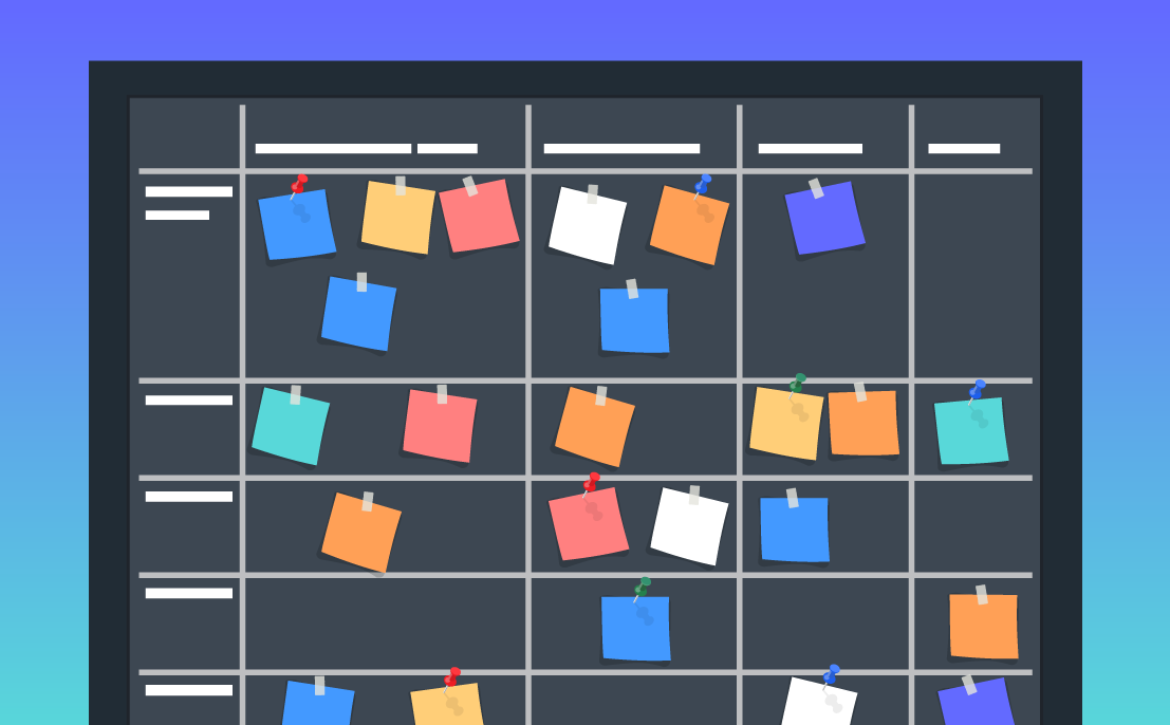
As mentioned earlier, the Product Backlog should be transparent for stakeholders and the Development Team. There are many ways of creating more transparency, but one of the most powerful ones is to literally put the Product Backlog on the wall or board! Of course you have to take all kinds of things into account (like a distributed setting or access restrictions), but what typically works great to increase transparency, is to put stuff somewhere on the wall, close to the team, so that when people walk by, they can actually see what the team is working on now, and what they will be working on in the near future.


There is more than customer or business value

The final tip for today is that there is more than business or customer value that you need to consider. Of course you want to deliver as much value for customers, users and the organization as possible, but should it be at all costs? Hopefully not! What we’ve seen a lot of Product Owners do, is that they are fully focussed on delivering as much features as possible. But, as a Product Owner, you are not responsible for delivering more features! You are responsible for maximizing value for customers and users! To put it otherwise: You are responsible for the success of the Product. This doesn’t only included deciding on new features or functionalities in the Product. It also means that you should consider resolving bugs, technical debt, improving the Products’ architecture, improving performance and security. It also means you should spend time on test-automation and the deployment/delivery process. If you spend time on automating manual testing and/or manual deployments, you will eventually be able to deliver more value, with higher quality in a shorter period of time!


These are the useful tips for Product Owners on the topic of Product Backlog Management! I hope you learned a few things and enjoyed them.

agile innovation design

There are no secrets to success. It is the result of preparation, hard work, and learning from failure.

Colin Powell

Digitizing Retail Experiences

A Global Perspective
Digitizing Retail Experiences
November 12, 2020 
10 am (EST)
Register now
Retailers have been focused on digital transformation to meet changing consumer expectations for at least a decade. The current uncertainty in the future of consumer confidence and behaviour patterns is both a challenge and an opportunity—and sharing key insights is just one way to meet the problem head-on.
Product enablement consultancy Rangle and leading online marketplace platform Arcadier present this panel on the future of retail experiences. The discussion will focus on digital experiences, both in-store and online, and offer a wealth of insights from retail professionals around the world.
Rangle’s CEO Nick Van Weerdenburg and Arcadier’s Chief Strategy & Partnership Officer June Boo will be joined by Koos Berkhout, Co-founder of The Tecsa Group, and Peter Tonstad, CEO of Placewise, to share their industry expertise as retail consultants and service providers in a one-hour panel format.


You’ll learn: 

  • How digital experiences can enhance bricks-and-mortar retail
  • How the future of the mall is changing with online marketplace experiences
  • How the global pandemic is speeding innovation and digital transformation for retailers around the world
Speakers
Moderator:
Nick Van Weerdenburg
CEO, Rangle.io
Nick is the founder and CEO of Rangle, a product enablement consultancy that partners with enterprise retailers to solve their most complex digital challenges. Nick has evolved Rangle from a startup providing modern JavaScript solutions to a company that consults for the Fortune 500. Prior to founding Rangle, he worked in consulting, architecting and delivering global product development and supply chain solutions, as well as optimizing their multi-channel global marketing operations.
Nick panel talk image
Panelist: June Boo 
Chief Strategy & Partnership Officer 
Arcadier
June has been working with companies, internally or as a consulting professional, to develop go-to-market, business development and growth strategies. Her expertise resides in strategy, digital marketing, mergers and acquisitions, corporate planning, performance and project management. She has helped many companies solve business issues and realize new growth expansion opportunities. As a corporate leader, June has served in executive roles at InterContinental Hotels Group, including Head of Channels and Head of Strategy for the Asia, Middle East & Africa region. She has also spent more than ten years in business consultancy with Boston Consulting Group Greater China, PricewaterhouseCoopers Singapore and New York, and BearingPoint.
June Boo image


About Towa


www.towasoftware.com

Towa was founded in 2002, by Gerardo Lopez with the vision of using the most advanced engineering disciplines to develop a new concept in the delivery of software products. Towa has devoted over a decade to the research, development and application of engineering processes around the analysis and development of information systems. Towa’s Value Proposition to the clients is to deliver Software Projects with Certainty, delivery without defects, which fulfil all of the requirements efficiently. Our goal is to become an agile co-innovation strategic partner with our customers.


About Arcadier

https://www.arcadier.com

Arcadier is the world’s fastest-growing online marketplace builder and is the recognized global leader of multi-vendor ecommerce marketplace technology with users from more than 170 countries. Founded in 2013 in Singapore by senior PayPal executives, it has offices in 5 countries including Singapore(HQ), Australia, Philippines and most recently the United States and the United Kingdom. Arcadier enables Enterprises, SMBs, Governments and Start-Ups to build their own white-labelled marketplaces efficiently and cost effectively. Arcadier’s platform supports various eCommerce models including B2B, B2C, P2P, Service & Rental, across industry verticals such as retails, consumer goods, commodities, wholesale, manufacturing and services.

Recently Arcadier also launched Arcadier Enterprise to target needs of large corporations and multi-brand retail companies for their marketplace development needs.

To see more Arcadier Expert Partners, visit:
https://api.arcadier.com/expert-partner


Towa Software Media Contact

To learn more about Towa Software – Engineering Culture of High Performance Teams or to speak to Towa Software VP, contact support@towasoftware.com, or visit the website at www.towasoftware.com

towa

TOWA SOFTWARE INC.

MSc. Adrian Lopez
Customer Success Manager
+1 (512) 487-7734
adrian.lopez@towasoftware.com


Plus! Get a promo code for Arcadier’s Marketplace Platform when you register
Receive25% OFF a 3-month subscriptions of Arcadier Basic, Growth & Scale Packages
OR
30% OFF semi-annual & annual subscriptions of Arcadier Basic, Growth & Scale Packages
Panelist: Peter Tonstad 
CEO, Placewise
Peter has been working with digital transformation since 1996 within finance, media, music industry and retail. His experience includes 5 years of management experience from Tidal/WiMP/Aspiro, having served as CEO, CFO and CCO. Aspiro/TIDAL was acquired by Jay Z and 15 other world-renowned artists at the beginning of 2015. He has been CEO of the consultancy firm Tarantell, International Director of Edda Media/Mecom Ltd., CEO of the media monitoring company Opoint, Director of Business Development at Dagens Næringsliv Nye Medier/NHST, Head of Northern European Sales for Thomson Financial Intelligence Data and Head of Sales for Web Solutions at Reuters. Peter holds a bachelor’s degree from The Norwegian Business School (BI) and has completed a Master of Management program in Corporate Finance.
Peter Tonstad
Panelist: Koos Berkhout
Co-founder, The Tecsa Group
Koos Berkhout is the co-founder of the Tecsa Group, a customer engagement consultantcy that uses data to augment the customer-retailer relationship. Koos holds board positions with Rakuten Kobo and StylePoints, and in his international career in loyalty and analytics, spanning more than 20 years, has served as a CMO, Director of Client Insights and Head of Business Insights. He has hands-on experience in the development, launch and management of some of the world’s best-known loyalty brands, including Nectar, Air Miles, Rakuten and yuu Rewards.
Koos Berkhout image

    Want to speak with us, leave your details to receive a call

    1. Name *
    2. Email *
    3. Phone *
    1. Comments *

    The right eCommerce solution

    Which is the right eCommerce solution for my business?


    Finding the right Partner for your E-commerce Business The new trend is to build a Marketplace using SaaS, and extend functionality with a plugins development.

    Ecommerce in numbers

    In 2019, retail e-commerce marketplace sales worldwide amounted to US$3.46 trillion, and e-retail revenues are projected to grow to a dizzying US$6.54 trillion in 2022 and will continue to drive the future of e-commerce forward. B2B (business-to-business) marketplace sales transactions are set to boom and will account for an estimated 30% of all worldwide online sales by 2024.


    Combined, both B2B and B2C (business-to-consumer) marketplaces are expected to grow web sales worldwide to an estimated $7.1 trillion while peer-to-peer marketplaces including eBay and Airbnb will reach $240 billion in combined sales by 2024. However, the area with the fastest-growing global marketplaces will be in B2B.


    Currently, only a small percentage of the annual worth of online B2B sales are made via marketplaces however, businesses are starting to realize the benefits of trading with partners via marketplace platforms. In this regard, as more businesses trade online, global sales will continue to grow which will include a wide range of industries and vertical markets.

    Should I build around a SaaS?

    SaaS, or otherwise known as Software-as-a-Service, is a software distribution model in which a service provider hosts applications via the internet for customers. SaaS falls under the form of cloud computing. Usage is subscription-based charging businesses either monthly, bi-annually, or annually to use the service. These online subscriptions come with their respective technical support and periodic upgrades, SaaS companies deliver usability without bogging down customers with details. You access content through a web browser interface and your content is hosted in either a cloud or shared server. There are a variety of businesses that provide this service for marketplace development such as Arcadier, CS-Cart, Dokan, and Sharetribe.

    How can I customize the SaaS?


    A plugin is a software add-on that is installed on a program, enhancing its capabilities. It is a form of integration of a separate application to the main platform, either by the platform owners themselves or by other third parties. For instance, you like to add an email marketing tool to your eCommerce business and you are using Shopify or Woocommerce to build your eCommerce, you can utilize the Quickbooks plugin that seamlessly works with your Shopify Store or your book-keeping or LiveChat plugin to create your customer support chat capability. A number of online store platforms offer a plugin that can turn your single merchant shopping cart into a multi-vendor shopping cart experience. Most of these were developed by third-party developers using their respective APIs and Webhooks, and these developers charge a fee for its use.

    What option best suits my business model? 

    This is the first question that goes through the minds of people who are trying to start their first eCommerce marketplace. Go with a SaaS provider such as Arcadier, CS-Cart, Dokan or Sharetribe, or via a plugin alternative that augments your platform to become a marketplace for online store platforms such as Shopify, Magento, or Woocommerce? It is key to understand the comparisons of their respective software delivery models.


    The answer to this question will be dependent on three factors: User preference, costs involved, and feasibility associated with plugin systems.


    Using standalone plugins is a great option, but it does have its limitations. For example, the plugin builder will still have to work within the confines of the eCommerce platform to change a user experience that is not natural to the main use case of the eCommerce platform. Dedicated Marketplace SaaS products have been built for the purpose of the marketplace experience in mind, so the user experience is designed from the ground up for a multi-vendor experience.

    Build a team for your eCommerce business


    Marketplace SaaS solutions are not significantly more expensive than what most plugin developers are charging for the download and use of their plugin. However, the risk of failure that the augmentation using a plug-in to a platform not developed to be a marketplace makes a dedicated marketplace SaaS solution a safer bet. The features provided by SaaS also enable businesses to efficiently create their own marketplace because a lot of the heavy lifting is already done for you, plug-and-play extensions, themes for your front-end, site optimization, dedicated support, analytics, and bug fixes are such examples.


    The SaaS option is built-for-purpose but that does not necessarily mean the plugin alternative option should be ruled out, it is still a good option for building a marketplace, however, there lies the problem that all the plugin components on your platform of choice may not necessarily be able to properly shake hands with each other especially on more mature platforms.

    Build fast and iterate 


    SaaS vs Open-Source eCommerce solutions has their similarities, benefits, differences, and challenges. Both have their own niche market and success stories. A lot of people have built excellent marketplaces around both solutions.


    The main factors to consider when choosing an eCommerce solution are budget, technical proficiency, and knowledge, and how serious are your plans to scale your business.


    The more niche or more mature your marketplace is, the more customization will require.

    Building valuable products: Remote agile teams

    Numerous teams are constructing their work into a hierarchy of epic, feature, user story, and task. Using the Scaled Agile Framework (SAFe) has made this hierarchy popular, but many other teams are following that model using the same structure.

    Epics provide big valuable products or big valuable changes to products. You construct them into shorter pieces of value so you can deliver solutions to your users sooner than waiting for a killer solution at the end.


    Features are constructed into high-value stories, which, according to the definition, should provide value in production, and again it occurs faster than building a whole feature.


    But there is a hidden pattern in the way teams are constructing work into an epic-feature-story hierarchy. Teams use agile tools to manage epics, features, stories, and tasks. But they too often use them to articulate a work breakdown structure (WBS) instead of a value breakdown structure (VBS).

    WBS refers to the common, age-old project-management practice of breaking tasks into smaller chunks, allowing teams to estimate time and costs for completion. VBS, instead, focuses on product delivery and sub-products, not tasks and sub-tasks.

    Please follow us to detail our findings in building valuable products.

    Old thinking ways result in poor user stories

    WBS has been used to plan development work for a long time, so it is deeply embedded in our brains. And when we were project-driven, this was a great practice.


    But with the agile movement for project culture and toward product culture, this method no longer works. You need to think in terms of product delivery and product value.

    Rewire your brain

    Here are two ideas to help people reframe agile development as a value breakdown structure (VBS) instead of a work breakdown structure (WBS).


    Method 1: Really understand what you are building, and why…

    Here, ask yourself and the team to articulate, at a high level, what they are building. Note that you’re not listing the steps to build it (that’s WBS) but instead are describing what it is (VBS).


    Collaborate to create a list of what you are building

    Let’s imagine the team says you’re building four things:

    • A new report here
    • Modifying an existing report with X
    • A new detail view with a graph for Y
    • Bringing function Z, from older version to newer

    The answer could be a list such as the one above, or it could be a one-sentence answer such as “an space ship.”


    With the team decide whether it’s an epic, feature, or story

    In a VBS, epics, features, and stories are the same thing: value delivery. It’s just that each has different rules and syntax due to each having a different level of risk.

    Epics are highest risk, features are less risky, and stories the least risky. So epics require more precision to secure you have thought through the risks and have the best chance of success.

    Additionally, every epic, feature, and story creates or modifies a product.

    So your team need to decide based on the following guidelines:

    • Epics are value that will be delivered to production or be production ready in more than two months.
    • Features can be delivered in a sprint.
    • Stories can be delivered in less time than a sprint.
    Group similar types with their product value

    Simply ask yourself “How long would it take to deliver this value to production?”

    Then simply assign the correct type to the piece of value! Just like that, you now have epics, features, and stories in your backlog.


    Look at the blocks

    Some believe that all valuable work must be visible from the epic level, because the epic level (in SAFe) is also the portfolio level. And the portfolio level is where you make financial decisions about work.


    But this is not actually correct. All three types—stories, features, and epics—are about value. The goal is to decentralize value decision making and push it downwards, where the risks are low. Stories and features are small, and the product owners and product managers are trusted and empowered to prioritize those types of work.


    People can also feel as if these stories and features are “orphaned” if they don’t trace to a higher-level container. But, in fact, they do trace to a higher-level container: the product value they are associated with.


    Remember that all three types either modify or create products. Just ensure that every epic, feature, and story traces to a product.


    Team work and break down all features and epics

    You might have a pile of epics, features, and stories that need to be built. If all of the work is small, you may have only stories. If all the work is big, you may have a list of epics. Or you may have any combination, strictly based on the size of the work. There is no hierarchy here, just a pile of different size work to do.


    Big items such as epics and features need to be decomposed so they can be prioritized with the other lower-level work. You can do this by asking, “What is a smaller piece of value we could do more quickly than this whole thing?” And as you de-construct them, you don’t do it into tasks but into value items.


    And once you decompose features and epics into smaller value chunks, you once again ask, “How long would this take to put into production, or to make production-ready?” And again you give them the appropriate epic/feature/story type. Repeat this until every epic and feature has been disintegrated to the story level.


    Stories do not disintegrated into smaller value; you can disintegrated those into tasks. Note that tasks are the only element in the hierarchy that are like those found in a WBS. They are tasks, not value chunks.


    In other words, the epics, features, and stories are all value chunks. The tasks are tasks, and they are optional.


    Eventually every epic is separated into features. Every feature is separated into stories. And all of them are value chunks, not tasks. And thus you have a VBS instead of a WBS.


    Now the story backlog

    So at the story level, you will have a bunch of stories, some of which are standalone, some that trace to features, and some that trace to features that in turn trace to epics. But all stories can now be prioritized against one another.


    And if they do trace upward, that will be considered during sprint planning. You want to finish a whole feature if possible, so a high-priority feature would increase the priority of the stories as well.


    Bottom line is that epic versus feature versus story is simply a first-level guess at the size of the effort to deliver value.

    Method 2: Adjusting an existing backlog

    For teams with an existing backlog that’s more WBS than VBS, this can be quite easy to repair.

    1. Grab the current list of epics, features, and stories and leave it open in the background.
    2. Notice there is a mix of some items that are WBS tasks, and some that are products or value of the VBS type. It is common to have a mix of both styles.
    3. Extract the products or value, and create a fresh backlog with only value delivery items.

    To accomplish step 3, take a task-style backlog item and ask, “What product or sub-product does this create or improve?” The answer will be the real VBS item that should be in your backlog instead. If you can’t figure out the answer, then why would you do that task?


    The third step can be fun and satisfying for your teams. Their new epics, features, and stories are true value work items. Each work item needs refinement, development, test, and deployment. Each is valuable to users.


    Imagine that your storyboard columns were “refine, develop, test, deploy, done.” Notice that a WBS task-style story doesn’t work on a board such as this: “test component Z” would make sense only in the test column, rather than flowing through them all.


    Value-type VBS stories, on the other hand, flow through all of this. “New finance report X,” for example: Refine your understanding of it. Develop it. Test it. Deploy it. Done! Value to the user is achieved. But when “Test component Z” moves to done, direct user value has not been achieved.

    software-team
    Real value on delivery

    Once you move away from a WBS to a real VBS, you can easily report on value delivery. Which epics closed? That is value delivery. Which features closed? Value delivery. Stories? Value delivery.


    So your value delivery reports can simply be reporting on work items closed. And it only works if the work items are real value delivery items, not work breakdown tasks. If every item is a value delivery item, these reports are satisfying and informative.


    If someone wants a report of value delivery for their dollars, they can now show their recently done backlog and answer that question by just using their work management tools instead of creating PowerPoint presentation. It’s a beautiful and better way!


    Change your focus to value

    Many people see their agile work management tools as a hierarchy of epic, feature, and story. And the WBS mindset win, they fit the WBS into the containers of epic, feature, and story.


    Instead, focus on products, sub-products, and value delivery. Refine and adjust existing backlogs by separating tasks from value. Think of the epic-feature-story hierarchy as nothing more than a first estimate on time. Epics take more than a three months. Features require 1 sprint. Stories are done within a sprint. And all are value delivery items.

    Team building: Empowering your mindset

    Recently we had given a mindset workshop to a group of engineers who were participating in Engineering Warriors Training® (EWT). We constantly seek to strengthen our training process, where learning is not only technical, but we also aim to provide tools that enrich the engineer’s personal and professional life.


    We found in the book “Mindset, The New Psychology of Success” of Carol Dweck PhD, that by cultivating a growth mindset the person becomes more open to learn through new experiences; instead of being intimidated by a new situation or something that may be considered difficult, the engineers (people like you and me) will feel attracted and interested, so that they are willing to try harder than they would normally do to overcome the challenge.


    People with this type of mindset are excited when they face a problem or something unknown; this is seen not even as something negative but as an opportunity to grow and learn. They have greater resilience and therefore greater perseverance.


    We may think that someone that has born with this mindset has a great advantage over others; however, in Carol’s proposal she shares that mindset is something that can be trained, just as you train your body for a marathon or for any sport.


    The “growth mindset” is a choice on how to see the challenges that arise in your life: you can see them as big stones that stop your progress, or as learning bridges through which you will have to stretch your capacity and once reaching the other side you will be stronger and bigger than before.


    A strategy to cultivate the “Growth mindset” is known as “The power of yet”, this is the power of believing that you can improve. Just by putting the word “YET” before any of your thoughts about your ability to solve something, this way you will open the possibilities for yourself, accepting that you are in a process of growth and learning, from which you will come out bigger than how you began.


    Small changes that we make in the way we see professional and life challenges, will open us up to greater possibilities and better results.

    java-development

    What are you yet to resolve (become)?

    + Towa Positive


    Managing Remote Agile Teams: 7 Strategies

    How can teams maintain effective communication when they are separated by location and time zones?

    Principles like “software over documentation,” “responding to change over following a plan” and “quality interactions over tools” take on whole new meaning when managing remote teams.

    Why Agile prioritizes communication

    Agile methodology recognizes face-to-face communication as the most efficient and effective means to share ideas. The benefits of sketching on cards or a whiteboard are two-fold — improving the level of understanding and reducing the time it takes to deliver the core message.


    Most credit the adoption of Agile thinking as the primary driver to create more open, collaborative office spaces no longer punctuated by rows of cubes and team members appearing every so often. Open spaces led to more drive-by conversations between team members and more feedback collected throughout the development process naturally.


    Unlike smaller teams who do have the option to co-locate, enterprises managing remote teams often don’t have the luxury of sharing the same physical space each day.


    Team structure options:

    • The stakeholders and the development team share the same physical space.
    • The business is physically separated from the development team with the stakeholders in one office and the development team in another, often offshore or nearshore.
    • The stakeholders and the development team are separated by distance and time. Additionally, the development team itself is distributed across cities or countries.


    Distributed teams must actively work to avoid falling into communication traps that shift the project process away from Agile development to a decidedly waterfall one. But, the world is a small place even for distributed teams — made smaller by the available communication platforms from Microsoft Teams, Trello, Slack, Jira, or Skype. Promoting the same close communication expectations is the key to supporting the Agile process on distributed teams.

    7 Communication strategies for managing remote agile teams

    Foster a culture of continuous integration while builds are regularly reviewed and planned.


    Creating a culture where continuous integration is the norm is especially valuable on projects with extended timelines or while managing remote teams. In this structure, it’s easy to opt for dividing work for teams along technical boundaries. These technical boundaries may be divided by frontend/backend work or even database and services layer/frontend. Team bandwidth or security might drive the boundaries. Additionally, some businesses may be cautious of releasing intellectual property into a cloud-based platform like GitHub.


    This usually results in the maintenance of two source code repositories with a commitment to merge them later. Resist this. The technical debt that results from this fractured code is more time-consuming to overcome than if the teams had increased the communication necessary to manage just one code repository in the first place. Overcoming any communication barriers to work on the same code base is worth it in every way.


    The team manages successfully at leading remote teams and achieving this culture will begin to see evidence manifest in the daily communication and behavior of team members:

    • All members actively strive not to break the build.
    • They will provide visibility to broken builds.
    • All will react with a sense of urgency to adjust build issues.
    Commit to frequent builds, so you don’t prioritize upholding the plan over agility.


    It’s easy to produce a giant spec instead of communicating daily with the remote development team or let distance become a reason to stay the course and avoid developing the solution when challenges or barriers arise.


    Building on a weekly schedule is good, daily is even better. Hold your team accountable to submit a change set to the source code control each time. Then, take advantage of your compiler as a stand-in team member to ensure your source code has reached or exceeded quality expectations. Adding smoke tests can propel this even further.


    Welcome the human process of developing custom software.


    Most people assume custom software development is a purely technical process. While it’s true the process is highly technical requiring years of training and experience to run successfully, software development is a human process first and relies on trust between individuals.


    Promote knowledge sharing on every team. This is less about documenting processes in a Wiki and more about nurturing this behavior in daily stand-ups or any time team members give updates.


    Support your team to share beyond what concerns to that day’s work. If a team member expects something they are working on may impact another role the next day, call that out. Once team members master the habit of sharing important, forward-looking insights, that’s when true knowledge sharing has been reached.


    Foster communication between UX designers and business analysts to accelerate throughput by a factor of two.


    Fostering close collaboration between designers and business analysts, urging extra attention to the graphical interface. This mean additional time is spent creating visual artifacts for the technical team to complement related user stories. The prize? Less questions related to aesthetics and less iterations created as a result of the mismatched expectations.


    Consider even non-functional requirements.


    For teams who are co-located, it’s easy to address questions around performance and scalability as they arise. Imagining and documenting requirements with the appropriate level of detail serves as the link between the business and technical teams.


    For distributed teams, understanding non-functional requirement feature plays an even bigger role. Without specific directions documented for the technical team, it might result in the production of an architecture that makes assumptions about the non-functional requirements resulting in increased rework, and time waste later.


    Managing a distributed team may mean documenting more.


    While all Agile teams strive to write “just enough” requirements, managing a distributed team means accepting “just enough” may still mean documenting more than would be created for a co-located team.


    Distributed team members can’t quickly sketch on a whiteboard to work through a complex concept. Rather than leaving your development and testing teams left guessing on the nuances that would otherwise be delivered verbally, document them and “give the answers” before the test.


    By augmenting user stories with test or acceptance criteria you can set the technical team up for success without drastically expanding the narrative.


    Choose a set of communication tools for your team that allows for the usual escalation of communication needs.


    When teams are co-located, the level of communication needed escalates naturally. It might begin with co-workers speaking one-to-one in the breakroom. If clarifying details are needed, additional subject matter experts may be pulled into the conversation. Then, the conversation shifts from many-to-one or many-to-many, depending on the context. Maintaining this escalation process is essential to create outlets for quick answers or more in-depth conversations despite any distance that may exist between team members.


    Types of Communication

    • Chat 1–1
    • Chat many-to-1
    • Voice call
    • Visual call
    • Screen share
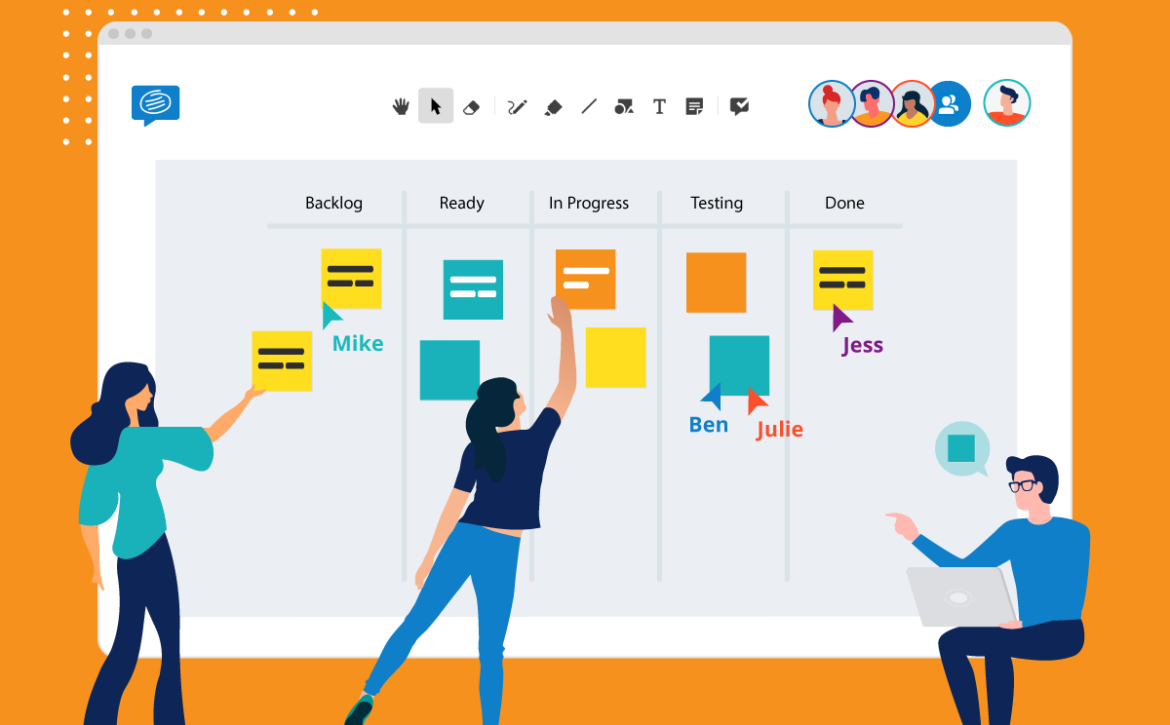
    • Collaborative Board


    The ability to ask quick clarifying questions is inherent in how most teams work. In the past, this could be accomplished with face-to-face drive-bys in the office. But, increasingly even teams who are co-located are relying on instant messenger or video calls to accomplish this.


    Instant messaging is a powerful tool for managing remote teams that include non-native English speakers. The tool allows them the space to craft replies without the pressure of discussing directly (and quickly) with a native English speaker. That said, tools like Microsoft Teams or Slack allow for escalation from messaging to voice and video calls and even screen sharing if needed.


    While the importance of instant messaging cannot be over-emphasized for distributed teams, watching body language and physical reactions to comments or questions are also critically important, especially when discussing challenges or questions to estimate feasibility or understanding.

    What does it take to win with distributed Agile software teams?

    No digital tool or communication strategy can replace the determination of the leaders needed to achieve the Team highest potential.


    Co-Innovate with us.


    Towa SoftwareBoosting Digital Transformation with best ROI – Remote Tech Teams. 300 strong.


    Towa joins Arcadier Marketplace Expert Partners Program

    Helping companies reach their full potential

    San Antonio, Texas, February 2020 – Towa Software, Inc. a leading software engineering company, today announced a new partnership with Arcadier, world’s leading online marketplace builder to better serve its North America customers seeking to customize and expand their marketplace to suit their business needs and co-innovate functionality.

    With more than 19 years of development experience, Towa has successfully executed numerous projects spanning a variety of industries, including, Retail, Banking, Financial & Trading Services, Telecommunications, Professional Services, Transportation, Higher Education and Utilities. Beyond web development, Towa also has depth experience with mobile technologies, developing solutions for international clients under iOS and Android platforms.

    Carlos Mendoza CEO at Towa said, “At Towa, we are very excited about the enormous co-creation possibilities this partnership opens for both companies! We truly believe we are giving a big step that will strengthen and extend our current capabilities.”

    “We are excited to have Towa Join our Arcadier Expert Partner programme as we are seeing strong demand for our marketplace technology in North America.” Commented Kenneth Low, Arcadier’s Chief Commercial Officer. “With this partnership, we can better serve our marketplace users in the region with strong reputable local software development expert partner.


    About Towa

    www.towasoftware.com

    Towa was founded in 2002, by Gerardo Lopez with the vision of using the most advanced engineering disciplines to develop a new concept in the delivery of software products. Towa has devoted over a decade to the research, development and application of engineering processes around the analysis and development of information systems. Towa’s Value Proposition to the clients is to deliver Software Projects with Certainty, delivery without defects, which fulfil all of the requirements efficiently. Our goal is to become an agile co-innovation strategic partner with our customers.

    About Arcadier

    https://www.arcadier.com

    Arcadier is the world’s fastest-growing online marketplace builder and is the recognized global leader of multi-vendor ecommerce marketplace technology with users from more than 170 countries. Founded in 2013 in Singapore by senior PayPal executives, it has offices in 5 countries including Singapore(HQ), Australia, Philippines and most recently the United States and the United Kingdom. Arcadier enables Enterprises, SMBs, Governments and Start-Ups to build their own white-labelled marketplaces efficiently and cost effectively. Arcadier’s platform supports various eCommerce models including B2B, B2C, P2P, Service & Rental, across industry verticals such as retails, consumer goods, commodities, wholesale, manufacturing and services.

    Recently Arcadier also launched Arcadier Enterprise to target needs of large corporations and multi-brand retail companies for their marketplace development needs.

    To see more Arcadier Expert Partners, visit:
    https://api.arcadier.com/expert-partner

    Towa Software Media Contact

    To learn more about Towa Software – Engineering Culture of High Performance Teams or to speak to Towa Software VP, contact support@towasoftware.com, or visit the website at www.towasoftware.com

    towa

    TOWA SOFTWARE INC.

    MSc. Adrian Lopez
    Customer Success Manager
    +1 (210) 787-4525
    adrian.lopez@towasoftware.com


    “At Towa, we are very excited about the enormous co-creation possibilities this partnership opens for both companies! We truly believe we are giving a big step that will strengthen and extend our current capabilities.”

      Want to speak with us, leave your details to receive a call

      1. Name *
      2. Email *
      3. Phone *
      1. Comments *